WoW Midnight Season 2 Raid Guide 2026
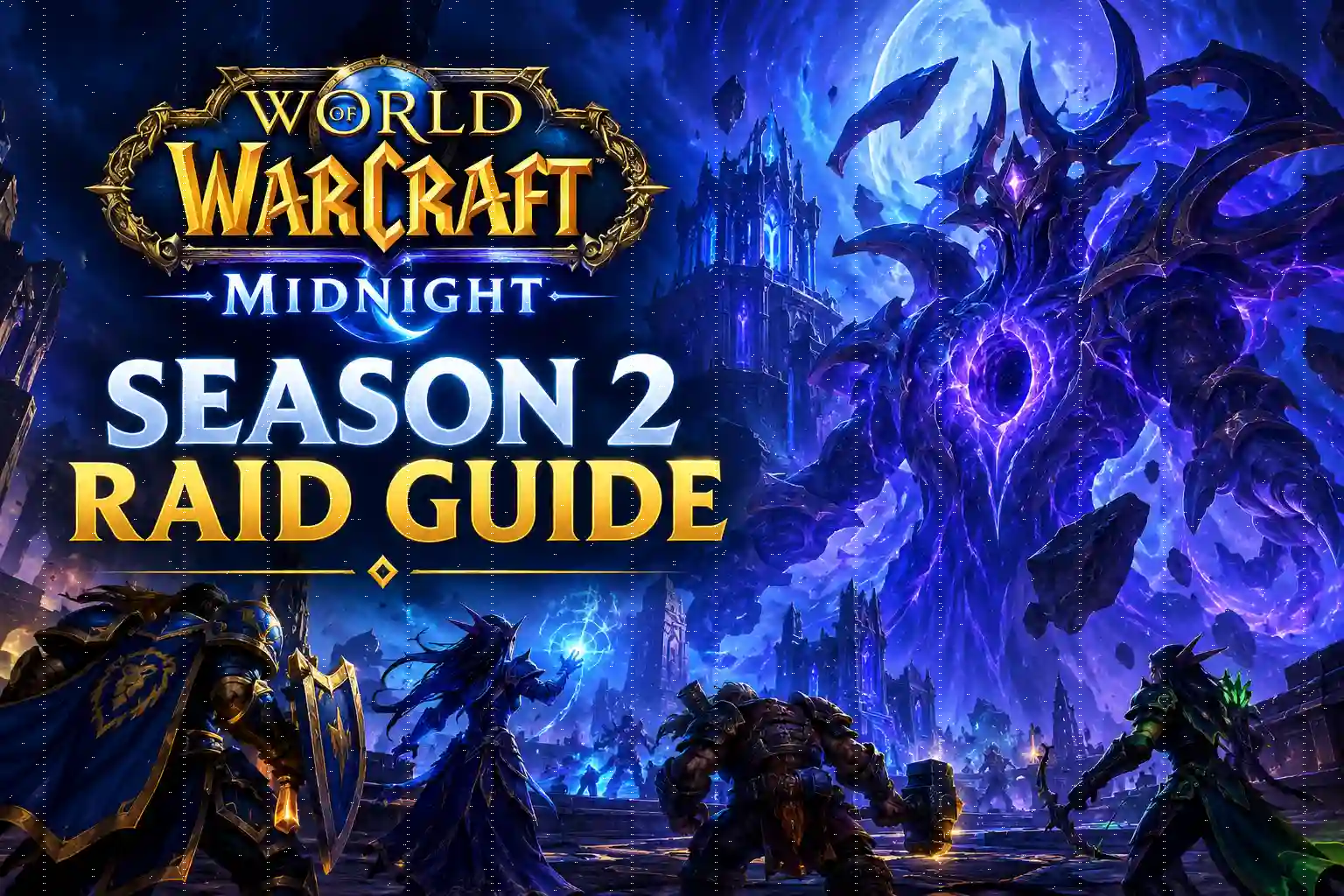
WoW Midnight Season 2 introduces a new raid for players looking for challenging PvE content, powerful gear, tier set pieces, achievements, and progression rewards.
The main Season 2 raid is The Venomous Abyss.
It features 8 bosses and takes place inside the Vaults of Atal’Utek on the Coiled Isle.
The raid is available in Story Mode, Raid Finder, Normal, Heroic, and Mythic difficulties. Normal, Heroic, Mythic, and the first Raid Finder wing opened during the week of August 18, 2026.
This WoW Midnight Season 2 Raid Guide covers the raid location, boss order, important mechanics, difficulties, loot, preparation, and tips for progressing through Venomous Abyss.
WoW Midnight Season 2 Raid: Venomous Abyss
The Venomous Abyss is the main raid of Midnight Season 2.
The raid takes place beneath the Coiled Isle, inside the Vaults of Atal’Utek.
Players descend into the ancient vaults to stop the forces connected to Ula’tek and prevent the ancient threat from being unleashed.
There are 8 bosses in total:
- Nek’zali the Soulcoiler
- Entombed Sentinels
- The Lost Explorers
- Vashnik the Malignant
- Sszorak
- The Twin Fangs
- The Coiled Altar
- Ula’tek
Ula’tek is the final boss of the raid.
Venomous Abyss Raid Location
The Venomous Abyss is located on the Coiled Isle.
The raid entrance is inside the Vaults of Atal’Utek.
There are multiple entrances into the vaults, and the actual raid entrance is located toward the northern part of the vault.
Before your first raid night, make sure you know where the entrance is.
This sounds simple, but knowing the location saves time when joining a group, returning after a wipe, or preparing for another boss attempt.
Venomous Abyss Boss Order
The raid has a slightly different structure from a simple linear raid.
Nek’zali the Soulcoiler is the first boss.
After defeating Nek’zali, the raid opens into two wings.
The second and third encounters can be approached through the available wings. Both wings must be cleared before the raid continues toward the later encounters.
The general progression is:
Nek’zali → two raid wings → Vashnik and Sszorak → The Twin Fangs → The Coiled Altar → Ula’tek
The exact order of some encounters can depend on the route your raid group chooses.
Venomous Abyss Boss Guides
The most important part of any raid is understanding the bosses.
You do not need to memorize every ability before entering Normal difficulty.
Start with the mechanics that can wipe the group.
Then learn the additional mechanics as you move into Heroic and Mythic.
1. Nek’zali the Soulcoiler
Nek’zali is the first boss of Venomous Abyss.
The encounter focuses on controlling the Soulcoil Well and dealing with enemies that threaten it.
One important part of the fight is preventing Restless Amani from reaching the Soulcoil Well.
Players also need to manage dangerous areas and avoid unnecessary damage.
Nek’zali Tips
- Control the adds quickly.
- Do not allow dangerous enemies to reach the Soulcoil Well.
- Keep damaging the boss while handling mechanics.
- Move dangerous ground effects away from the group.
- Tanks should manage their debuffs carefully.
- Save defensive cooldowns for heavy damage phases.
The first boss is a good introduction to the mechanics used throughout the raid.
2. Entombed Sentinels
Entombed Sentinels is a two-target encounter.
The two bosses should be separated because bringing them too close together greatly reduces the damage they take.
The raid needs to split into two groups and maintain a good balance between both bosses.
Entombed Sentinels Tips
- Keep the two bosses separated.
- Split the raid into two groups.
- Keep both bosses progressing at a similar pace.
- Avoid unnecessary movement between groups.
- Healers should prepare for increasing damage.
- Tanks need to manage swaps carefully.
The encounter rewards good positioning and communication.
Do not try to stack everything together.
3. The Lost Explorers
The Lost Explorers is a three-target council encounter.
The three bosses do not share health.
Your raid needs to control their health while keeping the bosses positioned correctly.
The three bosses should not be stacked together because doing so significantly reduces the damage they take.
The Lost Explorers Tips
- Keep two bosses close enough for efficient cleave.
- Do not stack all three bosses.
- Balance the health of the three targets.
- Interrupt important casts.
- Move away from the raid when targeted.
- Manage the special resources during the encounter.
- Follow the planned ultimate order.
This fight becomes much easier when the raid understands which boss should receive each special ability.
4. Vashnik the Malignant
Vashnik is one of the encounters that tests raid positioning and movement.
Players need to control where the boss is positioned while managing the mechanics around the arena.
The fight becomes increasingly difficult when the raid runs out of safe space.
Vashnik Tips
- Keep the boss positioned correctly.
- Move when dangerous effects appear.
- Avoid letting important enemies reach the central area.
- Keep the raid spread when required.
- Save movement abilities for important mechanics.
- Do not sacrifice positioning just to gain a few seconds of damage.
Good positioning makes this encounter much easier.
5. Sszorak
Sszorak is one of the more mechanic-heavy encounters in Venomous Abyss.
The fight involves wind mechanics and careful positioning.
The order of the wind tunnels around the room matters because it determines how the raid handles later phases.
Sszorak Tips
- Learn the wind order at the beginning of the encounter.
- Pay attention to raid positioning.
- Handle the cyst mechanics correctly.
- Prepare for the intermission.
- Use defensive cooldowns during heavy raid damage.
- Do not panic when the room starts pushing players.
This is a good example of a boss where understanding the mechanic is more important than simply dealing maximum DPS.
6. The Twin Fangs
The Twin Fangs encounter features two serpentine bosses.
The raid needs to control both targets while managing dangerous venom mechanics.
One of the major concerns is preventing Eternal Venom from reaching lethal levels.
The Twin Fangs Tips
- Keep both bosses controlled.
- Follow the tank swap plan.
- Place dangerous effects away from the group.
- Handle soak mechanics correctly.
- Clear Eternal Venom when required.
- Do not allow stacks to become lethal.
- Coordinate defensive cooldowns.
This encounter rewards communication between tanks, healers, and DPS.
7. The Coiled Altar
The Coiled Altar is the seventh boss encounter.
This fight contains several phases and requires the raid to use boss abilities correctly.
Tank positioning is particularly important because some frontal attacks can be used to clear dangerous mechanics.
The Coiled Altar Tips
- Position the bosses carefully.
- Use frontal attacks correctly.
- Clear dangerous venom effects.
- Follow the phase transitions.
- Coordinate tank swaps.
- Avoid unnecessary movement.
- Prepare for the final phase.
Do not focus only on boss damage.
Correct positioning is one of the main keys to this encounter.
8. Ula’tek
Ula’tek is the final boss of Venomous Abyss.
The encounter brings together many of the mechanics players have learned throughout the raid.
The raid needs to manage Ula’tek’s different aspects, deal with additional enemies, handle eggs, and protect the available space.
Ula’tek Tips
- Keep the boss properly positioned.
- Control the additional enemies quickly.
- Handle the eggs before they become a major problem.
- Manage tank swaps.
- Move correctly during major abilities.
- Use defensive cooldowns during heavy raid damage.
- Keep the remaining platform safe.
As the final boss, Ula’tek requires strong coordination.
Do not rush mechanics just to increase DPS.
A clean execution is more valuable than a slightly higher damage meter.
Venomous Abyss Raid Difficulties
Venomous Abyss offers several difficulties.
Story Mode
Story Mode is designed for players who want to experience the raid’s story without the same difficulty as traditional raiding.
It is a good option for players who want to see the encounter and learn the environment.
Raid Finder
Raid Finder is designed for players who want a more accessible matchmaking-based raid experience.
It is useful for learning the basic mechanics before joining organized Normal or Heroic groups.
The Raid Finder wings opened progressively during Season 2.
Normal
Normal is a good starting point for organized raiding.
You can learn the mechanics while still receiving meaningful gear and progression rewards.
If this is your first time raiding in Midnight Season 2, Normal is the best place to learn the fights before moving into Heroic.
Heroic
Heroic increases the difficulty of the encounters.
Mechanics become more punishing and mistakes become more expensive.
Before progressing into Heroic, make sure your character is properly geared and you understand the basic mechanics of every boss.
Mythic
Mythic is the highest raid difficulty.
Mythic raiding requires a coordinated group, strong class knowledge, optimized builds, and excellent execution.
Small mistakes can cause wipes.
If your goal is Mythic progression, learn every encounter before focusing heavily on maximizing damage.
How to Prepare for Venomous Abyss
Preparation can make your raid night much easier.
Before entering the raid, make sure you have:
- Appropriate gear
- Correct talents
- Enchants
- Gems
- Consumables
- Potions
- Flasks
- Food
- Repair materials
- Updated addons
- Boss timers
- A working interrupt setup
You should also understand your class.
For builds, talents, stats, and class setups, see our WoW Class Builds Guide 2026.
Choosing the right specialization can make a significant difference in raid performance.
You can also check our WoW Midnight Season 2 Best DPS Classes guide if you are deciding which DPS specialization to play.
Best Raid Roles in Midnight Season 2
Every raid needs a balance between tanks, healers, and DPS.
Tanks
Tanks control positioning and boss movement.
They need to understand:
- Boss positioning
- Tank swaps
- Defensive cooldowns
- Add control
- Movement mechanics
For current tank choices, see our WoW Midnight Season 2 Best Tanks guide.
Healers
Healers need to understand when raid-wide damage is coming.
Do not simply react to health bars.
Good healers plan cooldowns around predictable damage.
For current healer choices and raid preparation, use our other Midnight Season 2 class guides.
DPS
DPS players should focus on more than damage.
A strong raider:
- Avoids mechanics
- Interrupts important casts
- Uses defensives
- Performs their rotation correctly
- Uses utility
- Follows positioning instructions
Dying while chasing extra DPS is almost never worth it.
Venomous Abyss Loot
Venomous Abyss provides raid gear and progression rewards.
Each boss drops gear, with later bosses offering stronger rewards. Bosses can also drop Mistcrests used as part of the Season 2 gear system.
The raid also provides access to tier set pieces.
Tier gear can have a major impact on your character because set bonuses can change how your specialization plays.
This makes raid progression especially valuable for players trying to optimize their characters.
Great Vault and Raid Rewards
Raid participation also contributes to Great Vault progression.
Completing raid content during the weekly reset can unlock additional reward choices.
This means you should not think of raid loot as only the items that drop directly from bosses.
Your weekly progression can provide additional opportunities to upgrade your character.
A strong Season 2 routine should combine:
- Raid
- Mythic+
- Delves
- Weekly activities
- Character upgrades
Our WoW Midnight Season 2 Guide 2026 covers the wider Season 2 progression system.
Raid Tips for New Players
If you are new to raiding, do not try to memorize every mechanic immediately.
Start with the basics.
Learn the Boss
Read a short guide before each encounter.
Know what can kill you.
Know where you should stand.
Know when you need to move.
Watch the Floor
Many raid mechanics are communicated visually.
Do not stare only at your action bars.
Watch your character and the environment.
Follow the Raid Leader
If you are in an organized group, follow the assigned positioning and mechanic instructions.
Do not improvise during mechanics unless you understand the encounter.
Use Defensive Cooldowns
Do not save every defensive ability for an emergency.
If you know a large damage event is coming, use your defensive before it happens.
Do Mechanics First
DPS is important.
But staying alive is more important.
A dead player deals zero damage.
How to Improve Your Raid DPS
If you are playing DPS, focus on three things.
First, learn your rotation.
Second, learn the encounter.
Third, combine the two.
A perfect rotation is useless if you spend half the encounter running through dangerous mechanics.
Likewise, surviving every mechanic while doing extremely low damage will slow progression.
The goal is to maintain strong damage while handling every mechanic correctly.
Common Raid Mistakes
Ignoring Mechanics
The most common mistake is treating mechanics as someone else’s responsibility.
Every player has a job.
Learn yours.
Standing Too Close
Some abilities punish players who stack incorrectly.
Follow the raid’s positioning instructions.
Missing Interrupts
Important casts can cause massive damage or disrupt the encounter.
Use your interrupt whenever your assigned ability needs to be stopped.
Using Cooldowns at the Wrong Time
Save major offensive and defensive cooldowns for moments where they have the most impact.
Not Preparing Your Character
Entering Heroic or Mythic with an unfinished build makes progression harder for everyone.
Check your talents, gear, stats, enchants, and consumables before the raid begins.
Best Way to Progress Through Venomous Abyss
If your group is new to the raid, use a gradual progression path.
Start with Raid Finder or Normal.
Learn the bosses.
Improve your gear.
Then move into Heroic.
Once your group is comfortable with Heroic mechanics, start preparing for Mythic.
A simple progression path is:
Normal → Heroic → Mythic
Do not rush.
Learning the mechanics now will save many wipes later.
WoW Midnight Season 2 Raid Weekly Routine
A good weekly routine can include:
- Complete your raid clears.
- Progress toward your next difficulty.
- Run Mythic+ keys.
- Complete other Season 2 activities.
- Upgrade your gear.
- Check your Great Vault.
- Improve your class build.
- Prepare consumables before raid night.
For Mythic+ progression, our WoW Midnight Season 2 Mythic+ Guide covers the Season 2 dungeon rotation, affixes, timers, rewards, and key progression.
WoW Midnight Season 2 Raid Boost
Some players want to complete raid content without spending several hours every week organizing groups and progressing through bosses.
If you want help completing Season 2 raid content, you can check the WoW Midnight Boost services from LVL UP Boost.
Raid boosting can be useful for players who want to save time, obtain specific gear, complete progression goals, or clear difficult content.
If you prefer to raid yourself, use this guide to prepare your character and learn the important mechanics before entering Venomous Abyss.
Final Thoughts
WoW Midnight Season 2 brings a major new raid with The Venomous Abyss.
The raid contains 8 bosses, multiple difficulty levels, powerful gear, tier set rewards, achievements, and challenging mechanics.
Start by learning the basic encounters on Normal.
Once your group is comfortable, move into Heroic and eventually Mythic.
The most important thing is preparation.
Know your class.
Know the boss mechanics.
Use your defensive abilities.
Follow positioning instructions.
Interrupt important casts.
And most importantly, stay alive.
For the complete Season 2 overview, continue with our WoW Midnight Season 2 Guide 2026.
You can also continue your PvE progression with our WoW Midnight Season 2 Mythic+ Guide and WoW Midnight Season 2 Best Mythic+ Classes.